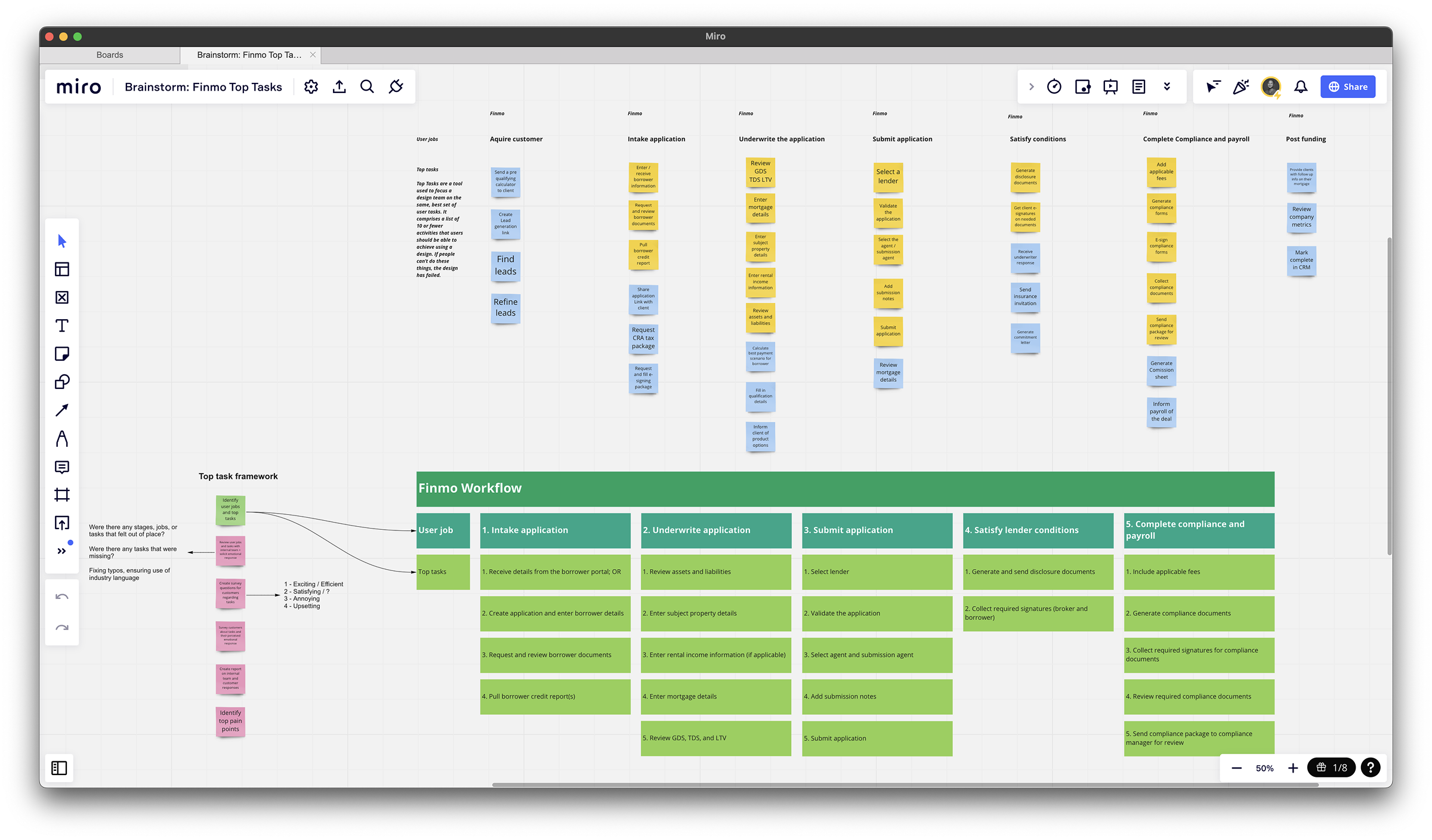
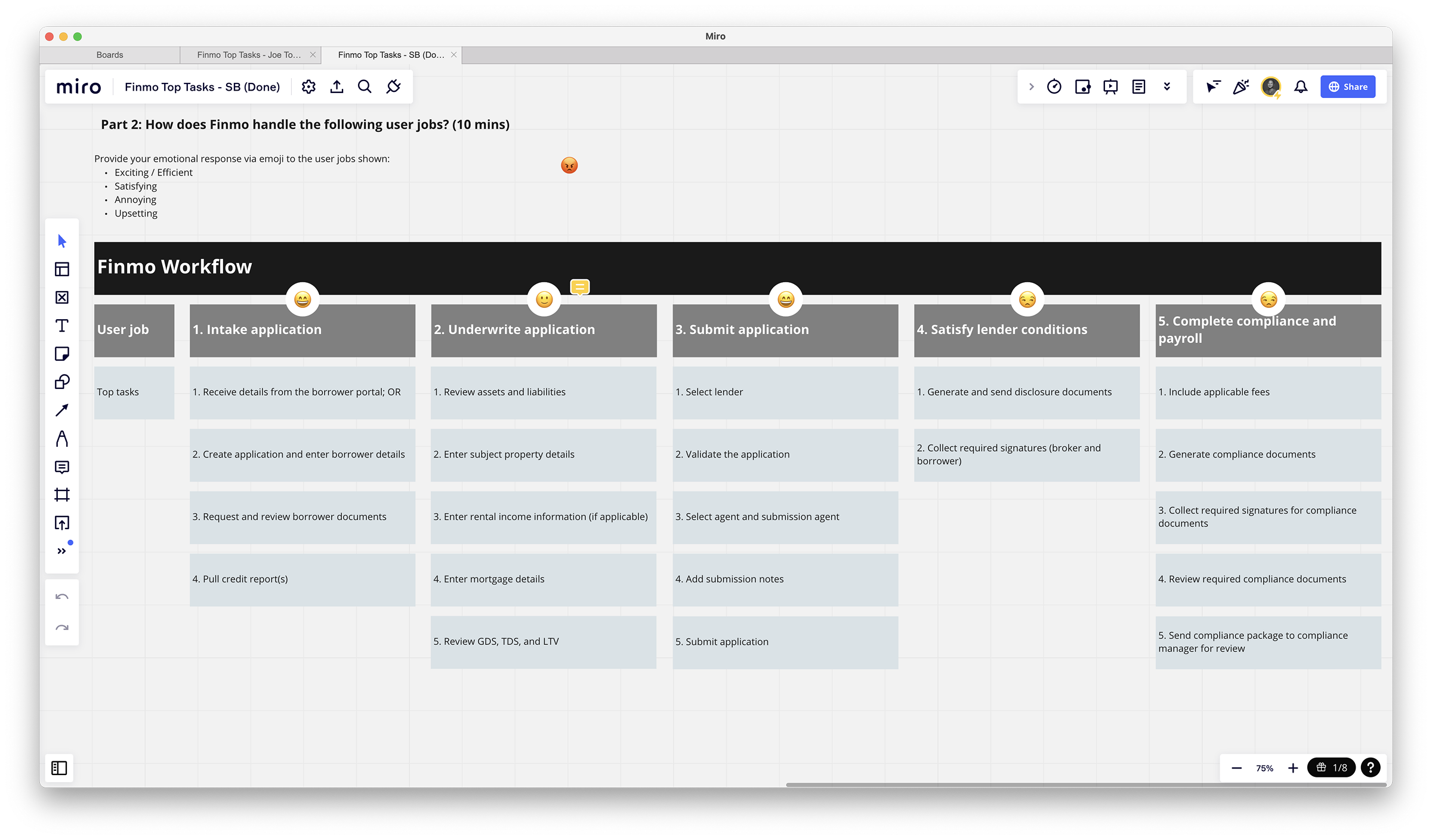
Finmo had been in the market for years, serving mortgage brokers through complex workflows. Over time, design decisions accumulated, but we realized we couldn't clearly answer which parts of the product mattered most to users.
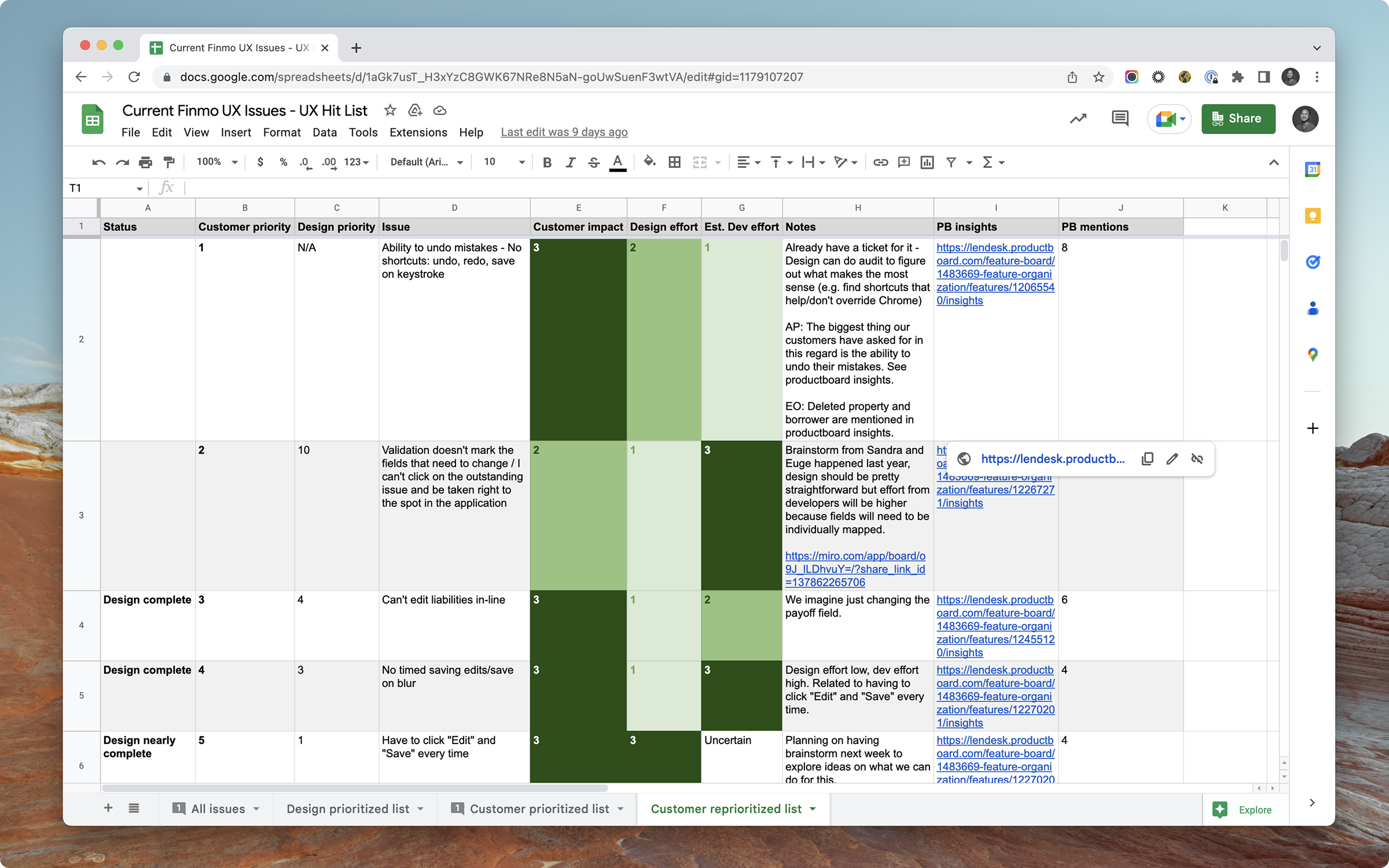
Feedback existed everywhere but it was fragmented, siloed, and inaccessible to decision makers.
Customer Success conversations
Sales calls
ProductBoard requests
Anecdotal Designer and PM intuition collected over past interviews
There was no mandate for this work, but we stepped in to address a gap where UX pain wasn't convincing enough at a leadership level.
We took ownership of:
To ensure the data enabled confident decisions, we made several intentional choices:
We measured workflow scores because pain often compounds across multiple steps.
We measured workflow scores because pain often compounds across multiple steps.
We determined that a 15% response rate (within the 5-30% average) was enough to establish clear directional insight to guide ongoing feature work.

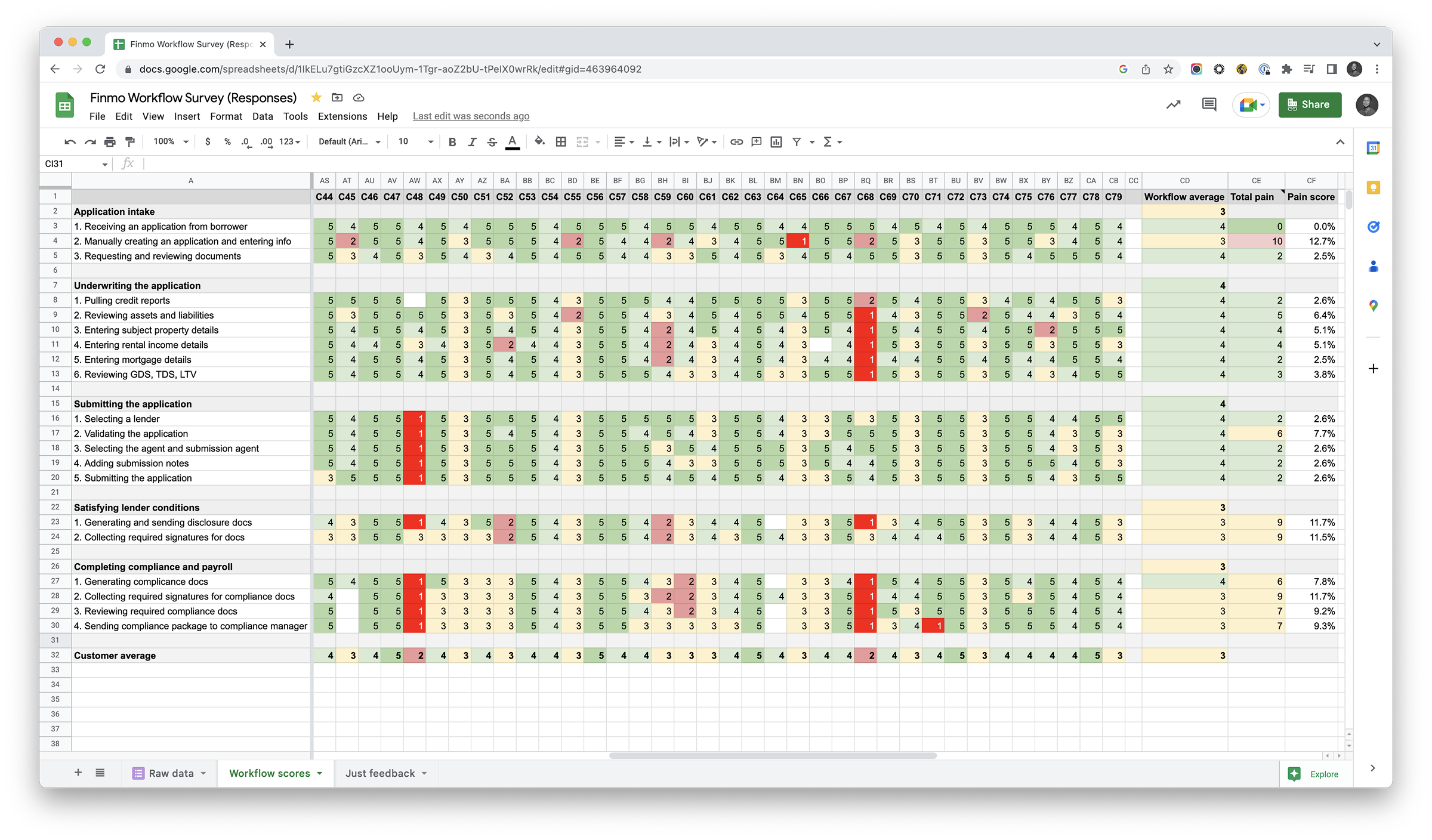
The results of this survey didn't just sit in a deck; they became the engine for our product strategy.
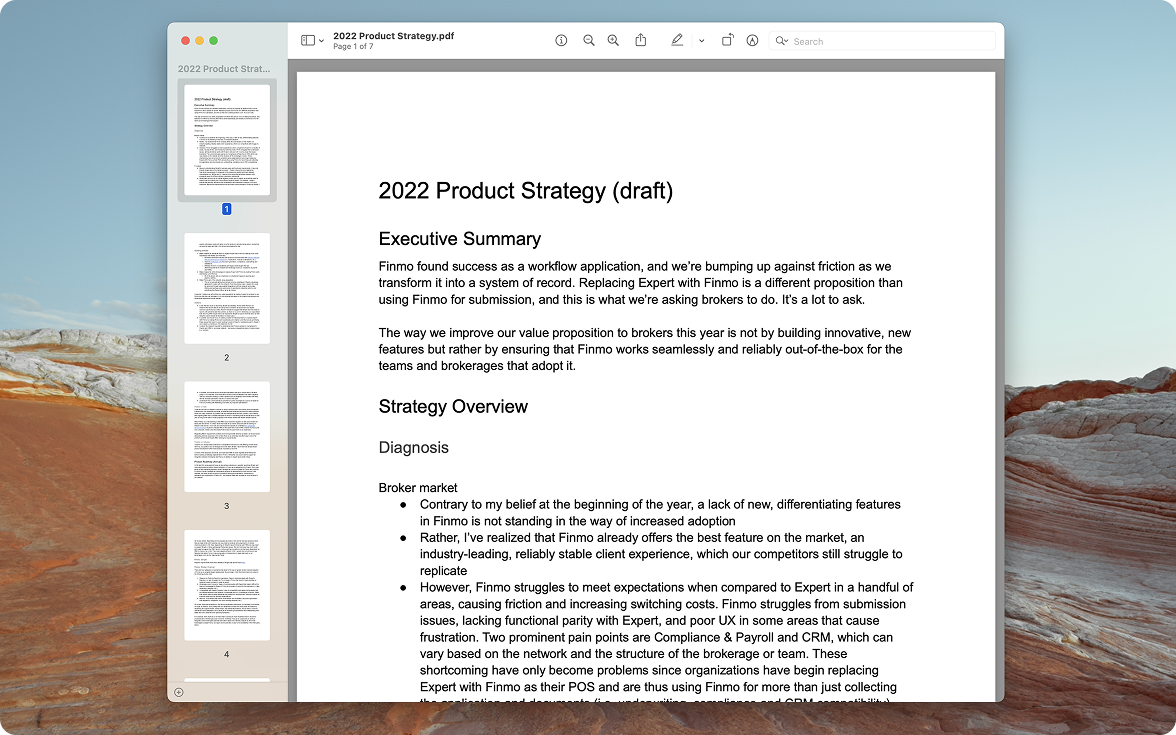
We established a single source of truth for UX pain across Finmo, aligning Sales, Product, and Engineering around the same problems.
Our findings directly informed quarterly product strategy, funding high-impact projects like "Modifying Application Details".
Improvements were formalized as part of product OKRs rather than just design-only backlog items.
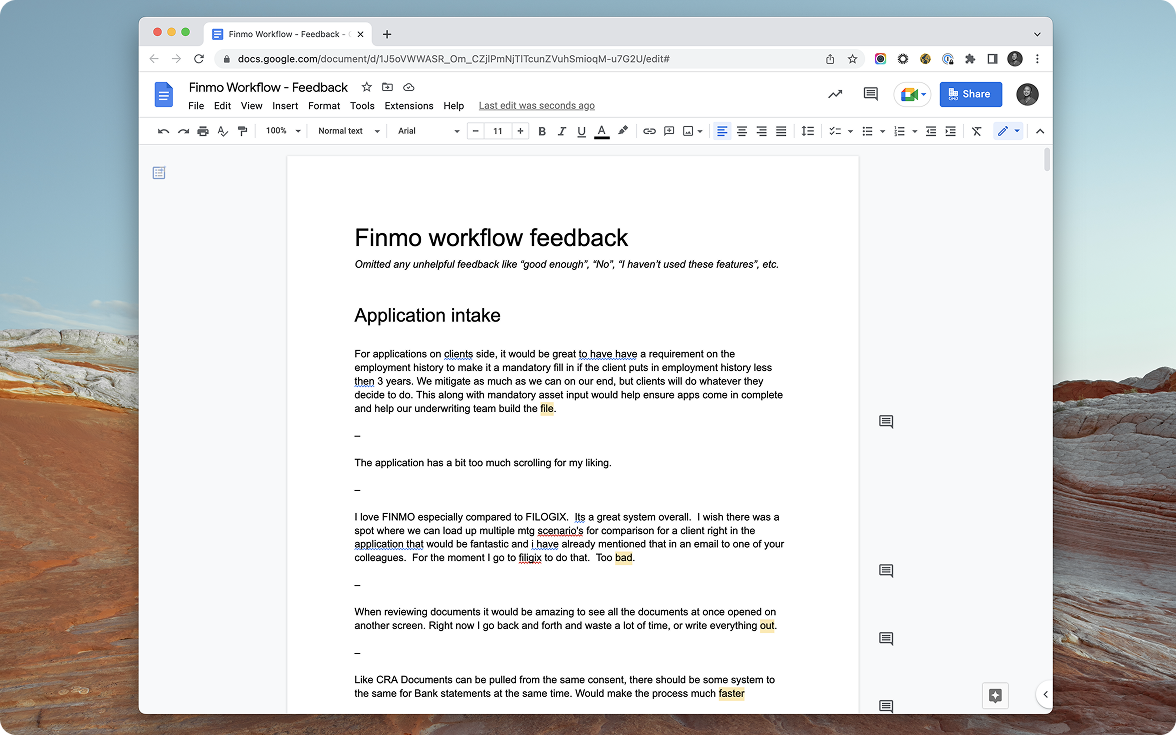
I believe that design’s greatest leverage lies in clarity. But clarity is only effective when it’s shared. If research findings remain siloed within the design team, they are invisible to the people responsible for the roadmap.
This project taught me that communicating research is as important as conducting it. To make a difference, we have to bridge the gap between user pain and business strategy. When research is accessible and understandable to non-designers, it ceases to be "a design opinion" and becomes a directional truth that decision-makers can act on with confidence.
I apply this mindset by:

